BASIC PROJECT INFORMATION
Financial Instrument: zivik Funding Programme
Type of Action: Youth peacebuilding, interethnic dialogue, digital resilience, democratic transformation
Project Status: Ongoing
Implementation Period: 15.02.2026 – 31.12.2026
Funded by: German Federal Foreign Office through ifa (Institut für Auslandsbeziehungen) within the zivik Funding Programme.
Lead Organization: Youth Alliance – Krusevo
Project Partners:
Civil society organizations, youth leaders, and experts from North Macedonia, Serbia, and Kosovo
Overall Objective:
To strengthen the role of young people and civil society organizations as credible actors in peacebuilding through fostering interethnic dialogue, enhancing digital resilience, and promoting active participation in decision-making processes.
PROJECT LOGIC
IF young people and civil society organizations are equipped with skills in critical thinking, digital resilience, and interethnic dialogue, AND IF they are provided with safe spaces for experiential learning, co-creation, and public visibility, THEN they will become credible actors in conflict prevention, contribute to reducing polarization, and foster sustainable processes of reconciliation and democratic transformation in the region.
This approach directly addresses structural challenges such as interethnic mistrust, political polarization, youth exclusion, and the influence of disinformation, contributing to the development of resilient communities and inclusive narratives
PLANNED ACTIVITIES
The project foresees an integrated approach combining field-based work, digital tools, experiential learning, and policy dialogue through the following key activities:
1. Invisible Borders Mapping Workshop (Krusevo)
From 25 to 29 March 2026, 60 young people from North Macedonia, Kosovo, and Serbia gathered in Krusevo to explore the concept of “invisible borders” – stereotypes, narratives, and divisions that shape our societies. The workshop created a safe and inclusive environment for dialogue, reflection, and collaborative mapping through interactive, non-formal learning methods. During the event, participants openly addressed sensitive issues, challenged their own stereotypes, bridged divides, and built new friendships. Through teamwork, the young people co-created six thematic “routes” that reflect shared experiences, identify local sources of tension, and outline pathways for future cooperation. The workshop contributed to increased trust among participants, the establishment of new cross-border connections, and the development of concrete analytical outputs that serve as a foundation for subsequent project activities and youth-led peacebuilding initiatives.
.png)
.png)
2. Remembrance Exchange Tours
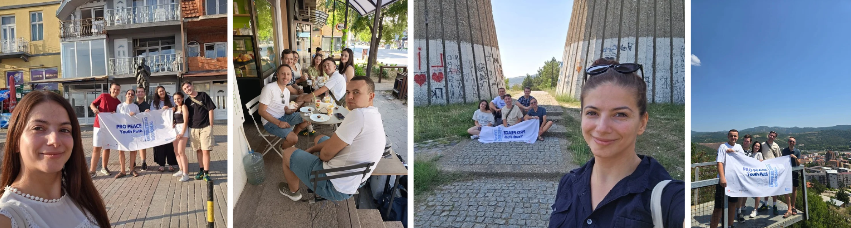
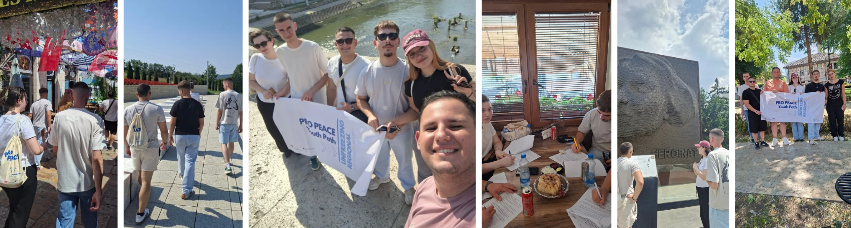
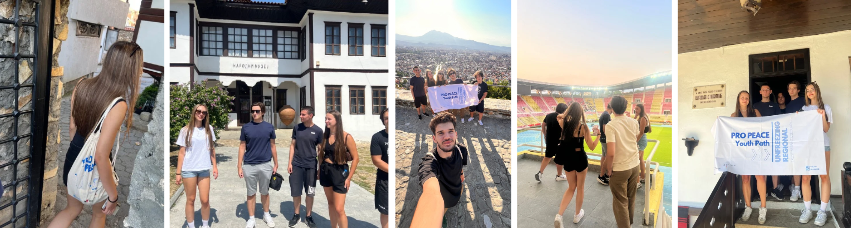
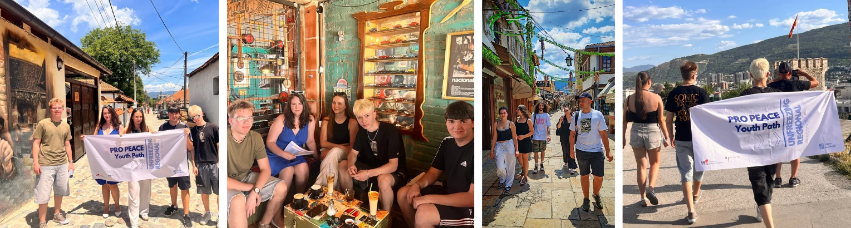
Between June and August 2026, 31 young people, supported by six group leaders, explored North Macedonia, Serbia and Kosovo through six five-day journeys. Developed during the PRO PEACE mapping workshop, the routes connected places of memory with everyday community life, giving participants opportunities to meet local people, exchange perspectives and explore the “invisible borders” shaping the region.
1. 'BEYONG THE LINES' | 17-21 June 2026 | 5 young people + 1 tour leader | Vranje, Mitrovica, Prekaz, Prishtina, Skopje, Struga and Ohrid
2. 'BALKAN ROUTE' | 24-28 June 2026 | 5 young people + 1 group leader | Skopje, Gračanica, Vushtrri, Mitrovica and Novi Pazar
3. 'CROSSING THE UNCROSSABLE' | 24-28 June 2026 | 5 young people + 1 group leader | Belgrade, Niš, Kumanovo (Zebrnjak), Skopje and Mitrovica
4. 'INVISIBLE BORDERS, SHARED SPACES' | 5-9 August 2026 | 5 young people + 1 group leader | Skopje, Tetovo, Prishtina, Prekaz, Bujanovac and Vranje
5. 'THE INVISIBLE BRIDGE' | 10-14 August 2026 | 6 young people + 1 group leader | Skopje, Prizren, Mitrovica, Niš and Vranje
6. 'LINES OF MEMORY' | 12-16 August 2026 | 5 young people + 1 group leader | Vranje, Skopje, Tetovo, Prizren, Prishtina and Fushë Kosovë
Travelling together gave participants space to explore unfamiliar places and hear different perspectives on history, identity and belonging. Visits to memorials and divided neighbourhoods opened sometimes difficult conversations, while shared markets, cafés and multilingual streets offered everyday examples of coexistence. Several participants entered neighbouring communities for the first time, despite living nearby. Conversations with residents and the hospitality they encountered challenged assumptions they had formed through media, family stories or limited personal contact.
The experience helped participants recognise how language, historical memory and inequality can shape relationships between communities. They practised listening to sensitive stories, questioning stereotypes and discussing differences respectfully. Post-tour feedback recorded higher self-assessed knowledge and strong motivation to join future activities. New friendships, shared reflections and participant-created photos and stories carried the learning beyond the journeys, providing a personal view of the region and possibilities for continued cooperation.
3. Youth Non-Violent Strategic Communications Bootcamp
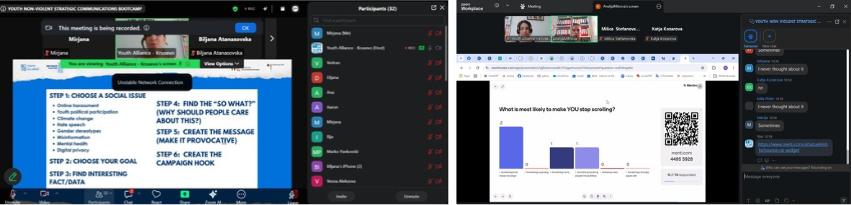
The five-day bootcamp took place online via Zoom from 27-31 August 2026, involving a core group of 30 young people and 12 civil society representatives. Participants practised identifying and reframing divisive content, verifying information, improving digital safety and developing messages for specific audiences. The programme covered digital literacy and algorithm awareness, disinformation, hate-speech detection, fact-checking, digital safety, civic monitoring and conflict-sensitive communication. Working with real online examples, participants explored how to communicate responsibly and create content promoting peace. They prepared initial draft communication products and received presentations and exercises to support their further development.
4. Youth-led Digital Peace Micro-campaigns
This activity will bring together 30 young people from North Macedonia, Kosovo and Serbia, working in six mixed regional teams to create and launch digital peace campaigns. With mentoring from media professionals, participants will develop content that counters disinformation, challenges divisive narratives and promotes interethnic solidarity. Young people will collaborate online, build skills in campaign design, storytelling and content creation, and produce a short video or animation for their campaign. Their work will be promoted through YAK’s social media channels, with the ambition of reaching more than 10,000 young people. Participants will receive a certificate and have the opportunity to meet in person at the multimedia exhibition “Remembering the Future” and the conference “Youth at the Table: Shaping Peace and Security through Policy Dialogue” in North Macedonia.
Applications are currently open until 1 November 2026! Previous experience in media production is not required. To apply, send your CV and motivation letter to nina@youthalliance.org.mk, using the subject line “Application for Digital Peace Micro-Campaigns”. Read the OPEN CALL and find out how to get involved.
.png)
5. Multimedia Exhibition “Remembering the Future”
A public exhibition will be organized in Krusevo, showcasing youth-produced content, conflict analysis outputs, and creative storytelling products. The exhibition will serve as a platform for dialogue between young people, institutions, and the wider public, increasing the visibility and credibility of youth voices in peacebuilding.
6. International Youth Conference “Youth at the Table: Shaping Peace and Security through Policy Dialogue”
A three-day conference will bring together young people, civil society, public institutions, and media representatives. The event will facilitate structured dialogue and result in a policy brief with youth-driven recommendations, as well as follow-up engagement with relevant stakeholders to support their integration into policy processes.